Death with Interruptions: Is Immortality a Utopia?
A thoughtful reading of José Saramago’s Death with Interruptions, exploring immortality, power, and the meaning of human finitude.
LITERATURE
Written by: Natalia Pachón - Director of Marketing and Production
1/31/20262 min read
Death with Interruptions: Is Immortality a Utopia?
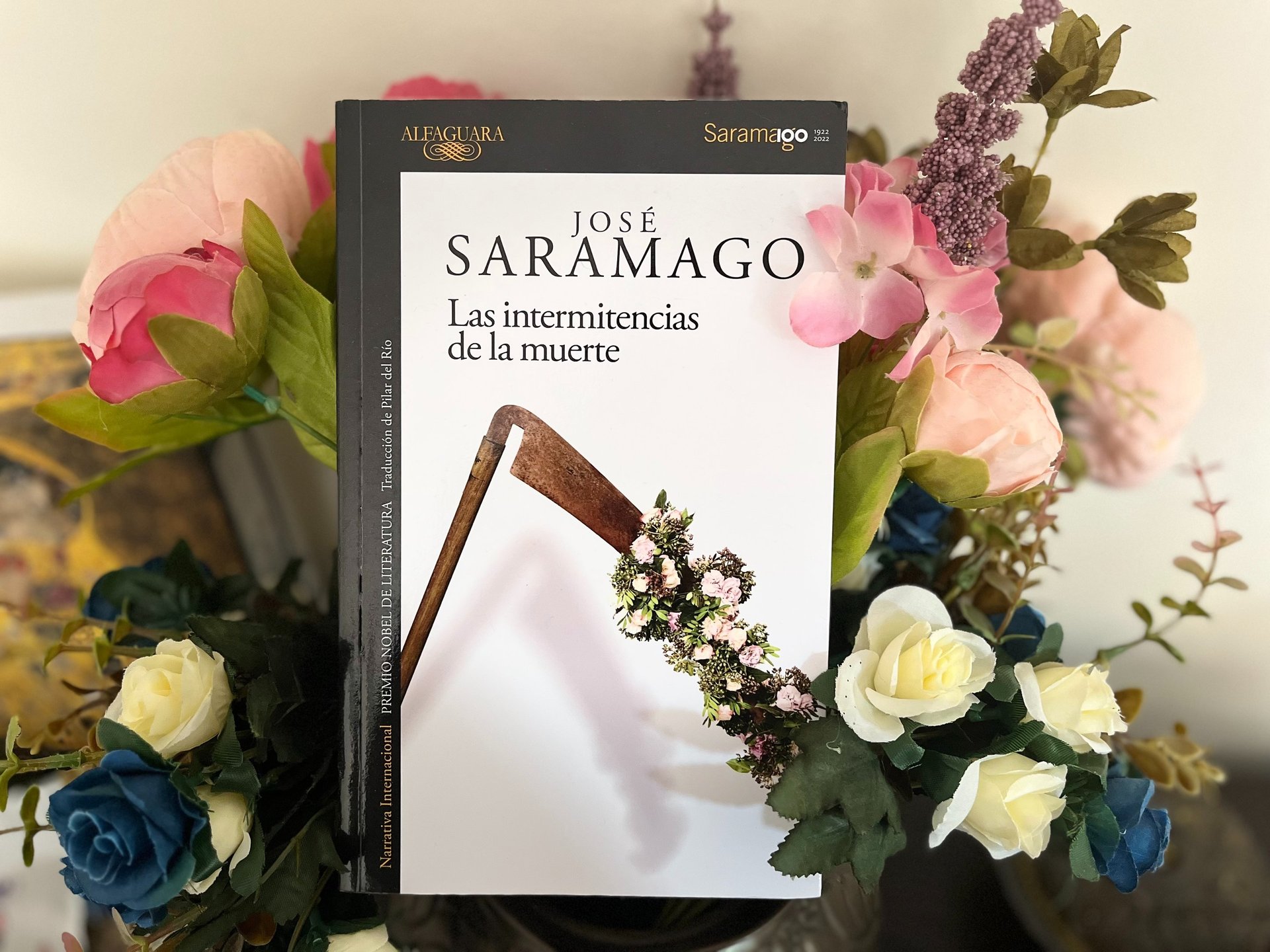
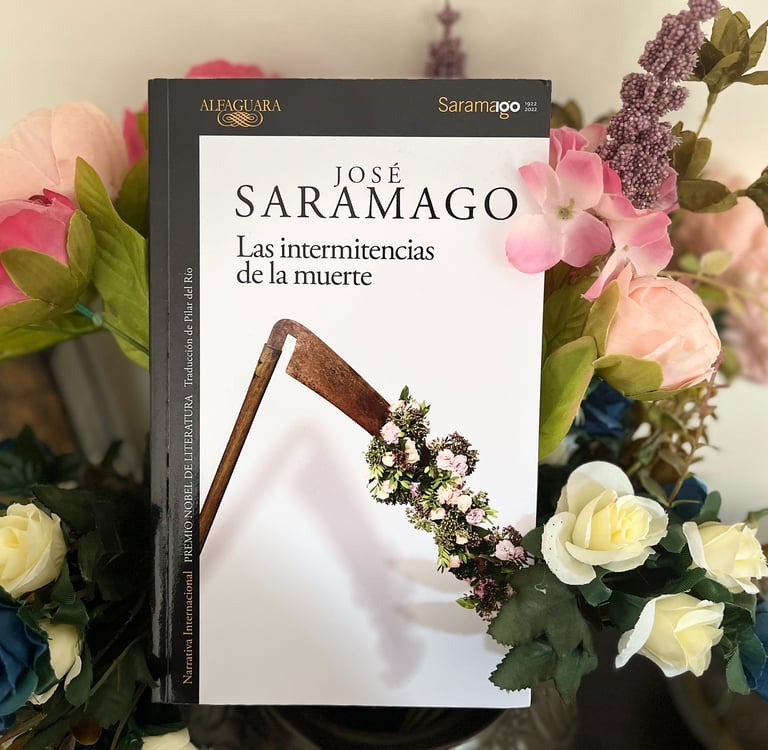
“On the following day, no one died.” With this sentence Death with Interruptions begins and ends—one of the most remembered and celebrated novels by Portuguese writer José Saramago, winner of the nobel prize in literature in 1998. This book opened our 2026 reading calendar in the family book club I have belonged to for four years now, and it was also part of one of the most beautiful projects we worked on at PITANGUS in 2025: Club de Lectura - El Escondite de Lucía.
True to Saramago’s style, the novel uses humor as a scalpel to dissect humanity’s great obsessions: death, power, and the illusion of control. Far from offering a solemn narrative, the author proposes one of his most provocative fictions—an anonymous country in which, from one day to the next, death simply stops acting. What might initially be interpreted as a utopia, immortality as a synonym for well-being, quickly reveals itself to be the opposite, becoming an administrative, political, and moral problem.
Published in 2005, in a world marked by debates on population aging, the excessive use of pharmaceuticals, and the contemporary obsession with prolonging life at any cost, the novel speaks directly to a period that was beginning to question not only how to live longer, but why.
In this context, the interruption of death exposes the fragility of the systems that depend on it: overwhelmed hospitals, insurance companies in crisis, governments without an action plan, and families trapped in the eternal care of loved ones who, although they no longer die, no longer fully live either. The novel thus sketches a key reflection: death is not only the biological end of life, but also an organizing structure of society.
The book is sharply permeated by an ironic, uncomfortable humor that on more than one occasion provokes an out-loud laugh from the reader. In his own way, Saramago ridicules official discourses and the State’s and the Church’s “reasonable” solutions, exposing their inability to confront a reality that overflows any dogma.
One of the most incisive gestures in the text is the humanization of death. When Death reappears as a female character, endowed with traits that bring her increasingly closer to us, discovering within herself a sensitivity and a series of contradictions she had never experienced before, the author subverts the traditional image of the cruel and relentless Grim Reaper. Death feels, doubts, falls in love, and in doing so confronts her own function. This personification does not seek to soften her role, but to complicate it: she is not absolute evil, but an uncomfortable necessity that gives meaning to time, urgency, and human decisions.
The narrative style—marked by long sentences, minimal punctuation, undefined dialogue, and constant irony, all characteristic hallmarks of Saramago’s writing—reinforces the reflective nature of the story. The narrative voice observes with critical distance, but not with coldness: there is a persistent satire directed at political power, religious discourse, and the bureaucratic logic that attempts to manage the unmanageable. In the end, death proves to be less arbitrary than the humans who try to control her.
Death with Interruptions offers neither comfort nor definitive answers. Its greatest achievement is forcing the reader to confront an uncomfortable question: what value would life have if it were not marked by finitude? On that edge between laughter and unease, the author suggests that perhaps death, with all its interruptions, is the last gesture of common sense we have left.